
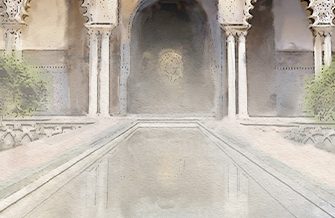
The Royal Alcázar of Seville is a royal palace with Moorish origins, considered a masterpiece of Mudejar architecture. It was commissioned by Islamic rulers and successively expanded by Christian kings, incorporating Gothic, Renaissance and Baroque elements. Among its most emblematic spaces are the Courtyard of the Maidens, with its arches
Email do marketing
- 30 de Abril, 2025
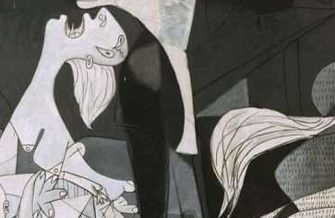
Pablo Picasso (1881–1973), born in Málaga, is a central figure in 20th-century art. A co-founder of Cubism, he revolutionised painting, sculpture and ceramics with his innovative approach and versatility. His best-known periods include the Blue, the Pink and the Cubist periods. Works such as Les Demoiselles d’Avignon and Guernica marked
- 30 de Abril, 2025
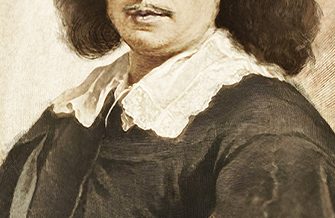
Bartolomé Esteban Murillo (1617–1682), born in Seville, was one of the great masters of the Spanish Baroque. He is known for the sweetness and spirituality of his works, especially in his depictions of the Virgin Mary and the childhood of Christ. His painting combines naturalism with a devotional sensibility, visible
- 30 de Abril, 2025
The Mosque-Cathedral of Córdoba is one of the most emblematic monuments of Islamic and Christian architecture in Spain. Built in the 8th century, it was originally a mosque commissioned by Abderraman I over the old Basilica of San Vicente, which was shared for a time by Christians and Muslims. After
- 30 de Abril, 2025
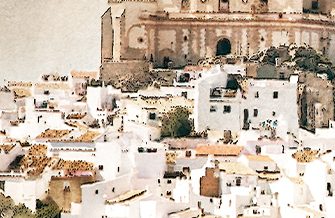
The White Towns are traditional villages in Andalusia, known for their whitewashed houses that contrast with the green of the mountains. Located in the provinces of Cádiz and Málaga, these towns preserve their Moorish architecture, with narrow, winding streets, flower-filled courtyards and historic castles. They reflect the fusion of Iberian,
- 30 de Abril, 2025
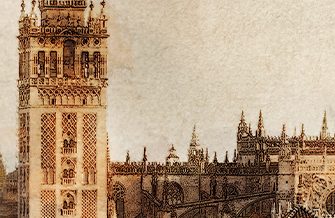
The Giralda is the bell tower of Seville Cathedral, originally built as a minaret of the old mosque between 1184 and 1198. Standing 104 metres tall, it is one of the greatest symbols of Seville and a World Heritage Site. Its Moorish base was built using materials reused from Roman
- 30 de Abril, 2025
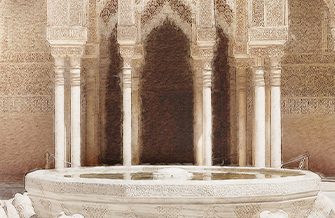
The Lion Fountain is one of the most emblematic elements of the Alhambra in Granada, located in the centre of the Lion Courtyard. Consisting of a dodecagonal marble bowl supported by twelve lion sculptures, the fountain represents a refined example of Islamic art and hydraulic engineering. Built at the end
- 30 de Abril, 2025
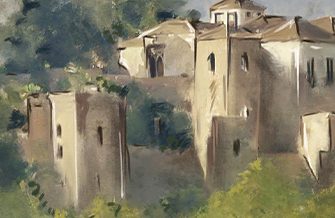
Málaga’s Alcazaba is one of the best-preserved Muslim fortifications in Spain. Built in the 11th century by the Hammudids, it combines military functions with the beauty of a palace and occupies a hill overlooking the Mediterranean Sea and the city centre. This defensive complex includes double walls, towers and interior
- 30 de Abril, 2025
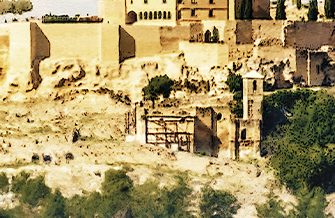
The Fortress of La Mota, located in Alcalá la Real, in the province of Jaén, is an impressive medieval construction dating back to the 8th century, during the Muslim period. For centuries, this fortress was an essential strategic point on the border between the kingdoms of Granada and Castile. The
- 30 de Abril, 2025
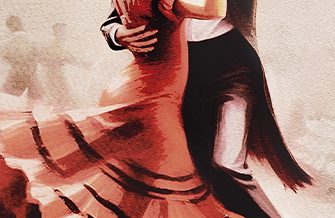
Flamenco is a profound and authentic artistic expression that combines music, dance and song and is one of the greatest symbols of Andalusian culture. With origins dating back to the 15th century, this art is the result of a fusion of Moorish, Gypsy, Jewish and Christian influences. In flamenco, cante
- 30 de Abril, 2025