The Portuguese Police has medieval roots, with its institutions embedded in the Afonsine, Manueline, and Philippine Ordinances. After the Lisbon Earthquake of 1755, the Marquis of Pombal modernized the system, replacing the old Quadrilheiros with the General Police Intendancy (1760), later followed by the creation of the Royal Police Guard (1801). This model was brought to Brazil with the arrival of the Royal Family in 1808, consolidating the Portuguese matrix of the country’s policing institutions.
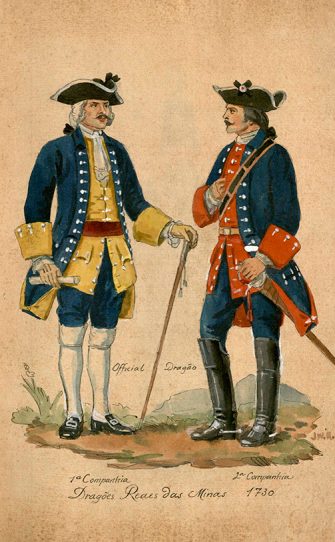
In 18th-century Minas Gerais, the presence of the Dragões — soldiers sent in 1719 at the request of the Count of Assumar — laid the foundation for an organized security force. They operated on horseback and on foot, defending the roads, repressing smuggling, and maintaining order. Their work in a region without maritime or terrestrial borders fostered an early form of police specialization, adapted to the geographic and economic particularities of the captaincy.
Influenced by the reforms of the Count of Lippe and Pombaline rationalization, the Regular Cavalry Regiment of Minas was established in 1775 — the célula mater (origin) of the Military Police of Minas Gerais. Its barracks in Cachoeira do Campo, where Alferes Tiradentes served, became a symbol of Minas Gerais’ police and military tradition — a historic space that continues to inspire the ideals of freedom and commitment to the protection of the people of Minas.

